

Judo Classes in Houston
Judo throws and takedowns are part of every class at Houston Jujutsu & Kickboxing Academy. Judo teaches you to fall safely, throw an opponent and control them on the ground, all while wearing a gi. Ages 12 and up, no experience needed, and your first week is free.
What You’ll Learn
- Ukemi: falling properly, so you can hit the ground without getting hurt
- Nage waza: throws
- Takedowns
- Gi grappling: gripping and controlling an opponent who’s wearing a jacket, the way you would in a real encounter with someone in street clothes
How Judo Fits Into Your Training
Judo isn’t a separate class. Its throws and takedowns are trained in every class, alongside jujutsu, kickboxing and CSW. The main difference is training in the gi. That’s how our students learn to throw from a grip, and why judo and jujutsu work so well together.
From Juko-Ryu and Judo to One System
Shihan Price’s training began with Juko-Ryu Jujutsu in 1983 under Shihan Bill Pearson and Shihan Jim Marler. He then added Kodokan judo, training with Vernon Schlief from 1988 to 1991. Today both are integrated into one system, Ni Tatsu-Ryu Jujutsu: the combat throws of jujutsu and the gripping and throwing skill of judo, taught together in every class.
What to wear: we can provide a gi, or you can bring your own. Gis must be plain white.
Judo “KODOKAN & JUKO-RYU”
In 1983 Shihan Price began his formal training in Juko-Ryu Jujutsu, a Japanese Martial Art. His teachers (Shihan Jim Marler/Bill Pearson) were the first men to teach him throwing (nage) techniques. This was his formal introduction to this style of training, yet the Jujutsu throws were different in where the entry involved a strike where Judo has no striking. The combat throws of Jujutsu also involve a different stance and the intent is to throw someone on their head. Judo is sport oriented where the throw is not meant to be so damaging and grabbing of the uniform (gi) is involved.
Jujutsu is the mother art of Aikido and of Judo. Jujutsu was for the battle field for the Samurai, but after the feudal time of fighting in Japan the Japanese needed a way to continue practicing their skills. Judo was one of the arts that took the violent combat techniques of Jujutsu and removed them to make it into a form to practice without damage or death to your opponent. Jigoro Kano developed a form of Judo that was a form of physical education for the Japanese public school students: Judo being a safer version of the Jujutsu fighting style. Facing a large influx of new students, he devised a system of belts with colors to illustrate their progress at a glance rather than having to ask each one to fight him every day.
Shihan Price began his Judo training while a brown belt in Jujutsu. He met Kodokan teachers Vernon Schlief and Nissan Zahavi, from New Orleans, Louisiana and began spending his weekends in New Orleans where the beginning of a relationship formed that would last for years to come. Shihan Price was shown the true art of Judo from a New Orleans Sheriff officer (Vernon), who had plenty of experience from the street. Here is where Shihan Price learned how Judo players can be light on their feet and have no problem taking you to the ground with speed and focus! The combinations of Judo in randori (Judo sparring) is like a sparring match of fakes and distractions you use in Karate or Kickboxing. He found out how much the importance of your ground game was vs. your stand up. The only frustration was of the many rules there was vs. Jujutsu. This is where you have a separation in the arts and a learning experience to help improve your technique in body contact throws and grappling.
During the era from 1988 – 91′ he had the opportunity to learn from some of the best. Till this day he still finds time to stop by the school and train.
In 2011 Shihan Price received his 5th Dan in Juko-Ryu Judo from JKI International under the Soke, Rod Sacharnoski. The Judo under Soke Sacharnoski is combat oriented in a manner that more is allowed. One major difference is the hand placement in randori, the hands never change position from a right side or left side throw. The throws are more direct and multiple type joint locks are allowed.
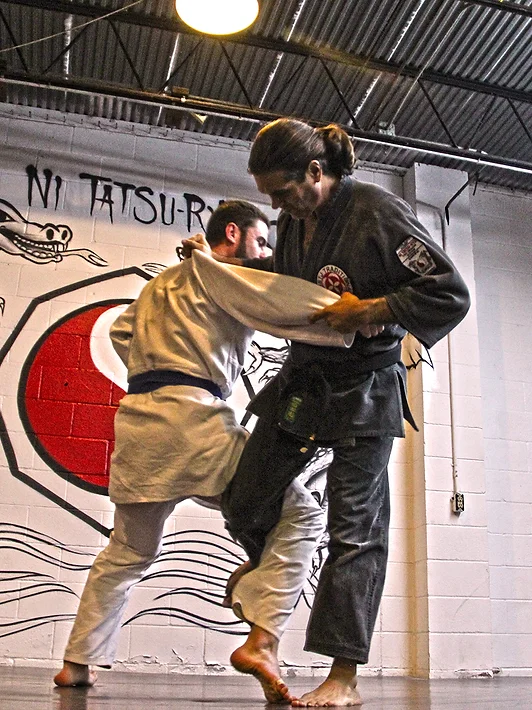
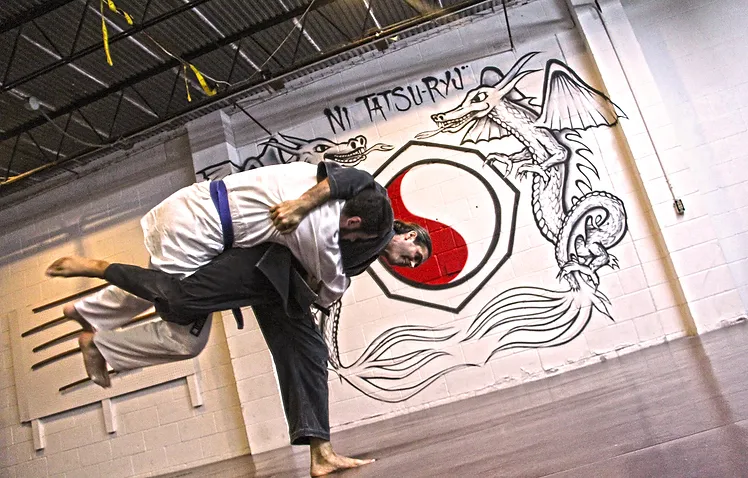

Judo is a great art to learn body contact throws at it’s best and learning the ground where the gi is involved. Come find out how Judo works for you and it’s also a great sport for kids to get involved. See you on the mats! Shihan Price