
Japanese Jujutsu Classes in Houston
Houston Jujutsu & Kickboxing Academy has taught traditional Japanese jujutsu in Houston since 1992, making it the city’s oldest Japanese jujutsu dojo still operating. Classes are led by Shihan Patrick Price, founder of the Ni Tatsu-Ryu system. Japanese jujutsu, also spelled jiu-jitsu or ju-jitsu, is the original unarmed combat art of the samurai and the root of both judo and aikido.
Who It’s For
- Adults and teens, ages 12 and up
- No experience or athletic background needed
- Anyone who wants real self-defense, not just sport
- Martial artists from other styles who want the complete art
What You’ll Learn
- Ukemi: breakfalls, learning to fall safely
- Atemi: strikes, with boxing and kickboxing in most classes
- Nage waza: throws
- Kansetsu waza: joint locks
- Shime waza: chokes
- Self-defense: escapes and releases from grabs and holds
- Ground fighting: Combat Submission Wrestling under Erik Paulson’s system, trained both gi and no-gi
- Traditional weapons for senior students: katana, bo, jo and knife
Students begin at white belt and progress through seven kyu ranks, from Rokyu (white) to Ikkyu, before earning Shodan (black belt). See our belt ranks and grading system.
Japanese Jujutsu vs. Brazilian Jiu-Jitsu
Brazilian Jiu-Jitsu grew out of Japanese jujutsu by way of judo, and it focuses mainly on sport grappling on the ground. Japanese jujutsu keeps the complete combat art: strikes, throws, joint locks, chokes, ground fighting and weapons, all built for self-defense rather than points.
Your First Class
Text us at 713-240-1316 first. Tuesday is the best night for a first visit. Wear comfortable workout clothes. You’ll start with the basics, like how to fall safely, stand and move, and practice techniques with a partner at your own pace.
Frequently Asked Questions
Do I need experience?
No. Most students start with none.
How old do I need to be?
Classes are for ages 12 and up.
How much does it cost?
$115/month, and your first week is free.
Is this Brazilian Jiu-Jitsu?
No. Japanese jujutsu is the older, complete combat art; see the comparison above.
Jujutsu “THE GENTLE ART”
Translated into English, Jujutsu means “gentle art.” The gentleness of the art is expressed in the execution of the technique, and is not reflected in the effect upon the attacker, except at the discretion of the person executing the technique. Using the techniques, a person may either control an opponent with a minimum amount of pain (neutralizing), or use a technique designed to produce a great deal of pain by breaking points or dislocating joints (immobilizing). Many times the only difference between neutralizing and immobilizing is the amount of pressure applied to the technique, other determining factors would be the direction of the line of force, and of course, the circumstances of the situation where force was deemed necessary, the resistance of the opponent could also determine how painful a technique will be.
Japanese JUJUTSU is the most potentially destructive of all Martial Arts. A student of Jujutsu (jujutsuka) has studied the forerunner of Judo (throws, chokes, and leverage), Aikido (joint locks, and circular control of an opponent), and Karate (punching, kicking, and striking). Therefore Jujutsu is a blend of all these arts. However, it is not considered as either offensive or defensive art.
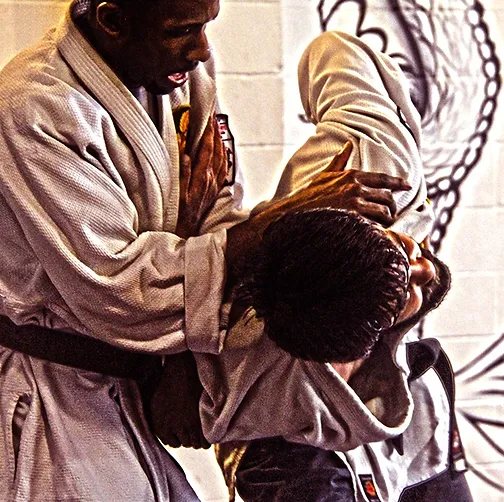
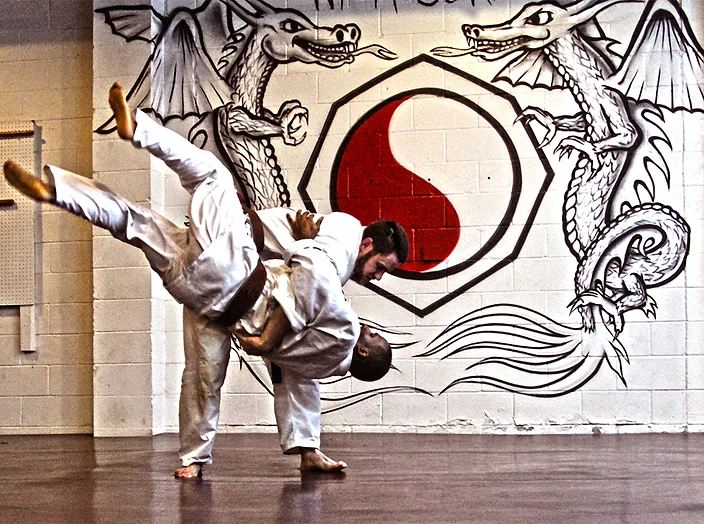
The execution of Japanese Jujutsu techniques depends upon the motion and attitude of the opponent and the seriousness of the encounter.
A jujutsuka learns to exploit the weakness of an opponent’s actions. Although the jujutsuka is obligated to use good judgment and act responsibly in the selection and execution of his techniques, the techniques are many and varied and therefore can be violently effective.